
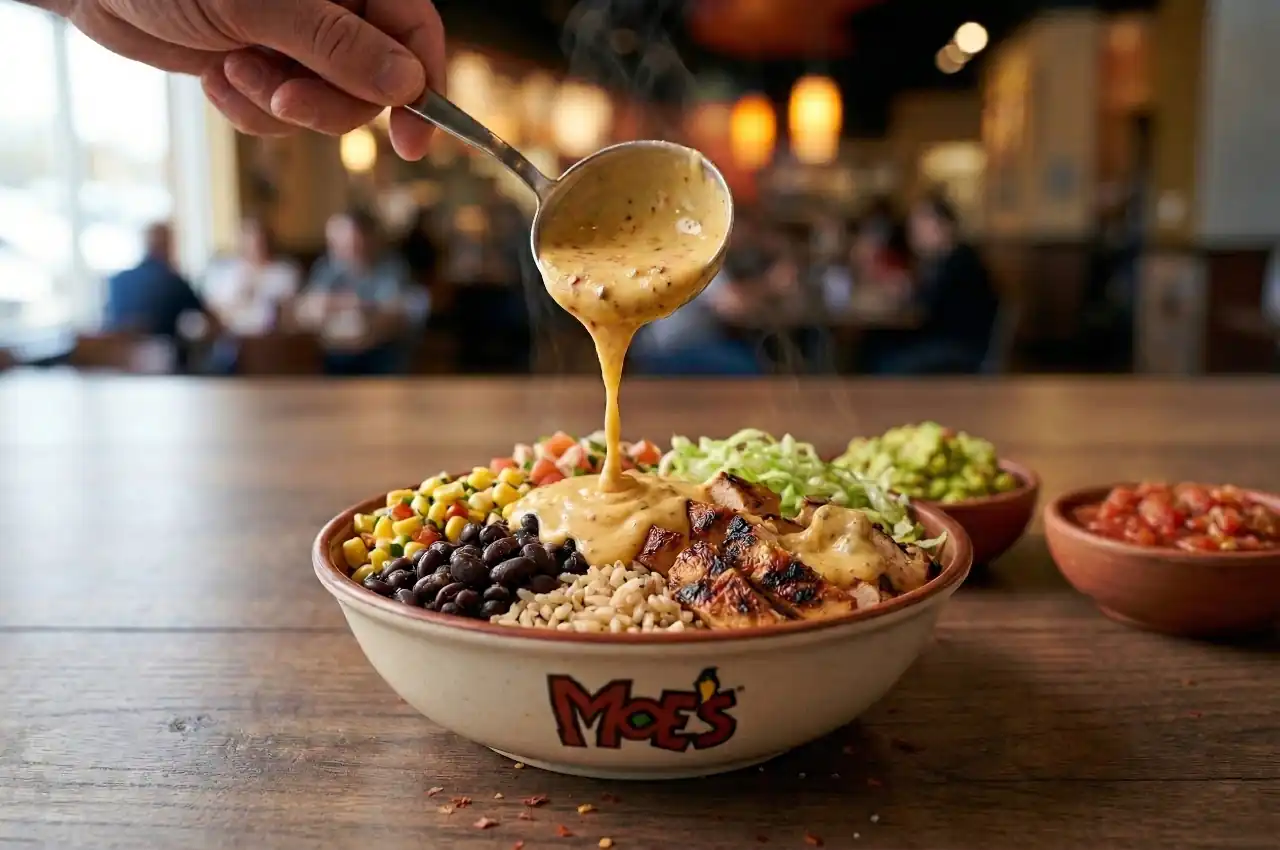
If you’re the kind of person who judges a burrito by the drips of cheese on the wrapper, you already know why Moe’s queso has fans. It’s creamy, pepper-speckled, and utterly dip-able. But if you’re trying to keep an eye on calories, fat, or sodium, that little cup can mean more than a moment of joy — it can swing a whole meal’s nutrition numbers.
If you’ve ever tried to track calories at a fast-casual restaurant, you know sauces can be the hardest part to estimate. Queso at Moe’s is a perfect example. It’s easy to dip mindlessly, but the portion you end up eating can quietly add a few hundred calories and a big hit of sodium to your meal. The goal here isn’t to tell you to skip it — it’s to understand what’s actually in Moe’s Queso and how to enjoy it without letting a small cup turn into a full-meal nutrition surprise.
Many people search for Moe’s Queso nutrition and calories before ordering because the portion size can dramatically change the fat, sodium, and calorie totals.
Also Read: Moe’s Nachos Nutrition Guide: Calories, Carbs & Healthy Swaps (2026)
Fact-checked disclaimer: Nutrition data on this page is sourced from Moe’s Southwest Grill’s official published nutrition information and verified against the USDA Food Database. Calorie estimates are approximate and may vary by location.
This article is for informational purposes only and is not a substitute for professional dietary advice.
What is in Moe’s Queso?
Moe’s queso is basically a melted, seasoned cheese sauce made from a processed cheese base (think Monterey Jack and Cheddar), dairy components like milkfat and whey, and stabilizers such as sodium phosphate to keep it smooth and saucy. Red bell peppers and mild chiles are common additions that add a little sweetness and a hint of heat, while salt and other preservatives bump up flavor and shelf life.
If you pull apart a cup, you’ll notice a silky, pourable texture rather than a grainy shredded-cheese melt — that’s the stabilizers and emulsifiers doing their job to make it cling to chips without separating. (Ingredients listing and manufacturer specs reflect this blend of cheeses, milkfat, peppers, and stabilizers).
The Nutrition Facts (Calories, Fat, Saturated Fat, Protein, Sodium)
| Serving Size | Calories | Fat | Saturated Fat | Carbs | Protein | Sodium |
| 6 oz side cup | 300–360 | ~24g | ~14g | ~8–10g | ~12g | 900–1100mg |
| 1 cup portion | ~460 | ~39g | ~23g | ~15g | ~18g | 1700–1800mg |
Restaurant servings are messy — different cup sizes and “side” vs. “bowl” matter — but here’s a practical read on common serving sizes so you can make real choices.
Even within the same chain, portion size can vary slightly depending on the location and how full the cup is filled, which is another reason calorie estimates for Moe’s Queso often appear as ranges rather than one exact number.
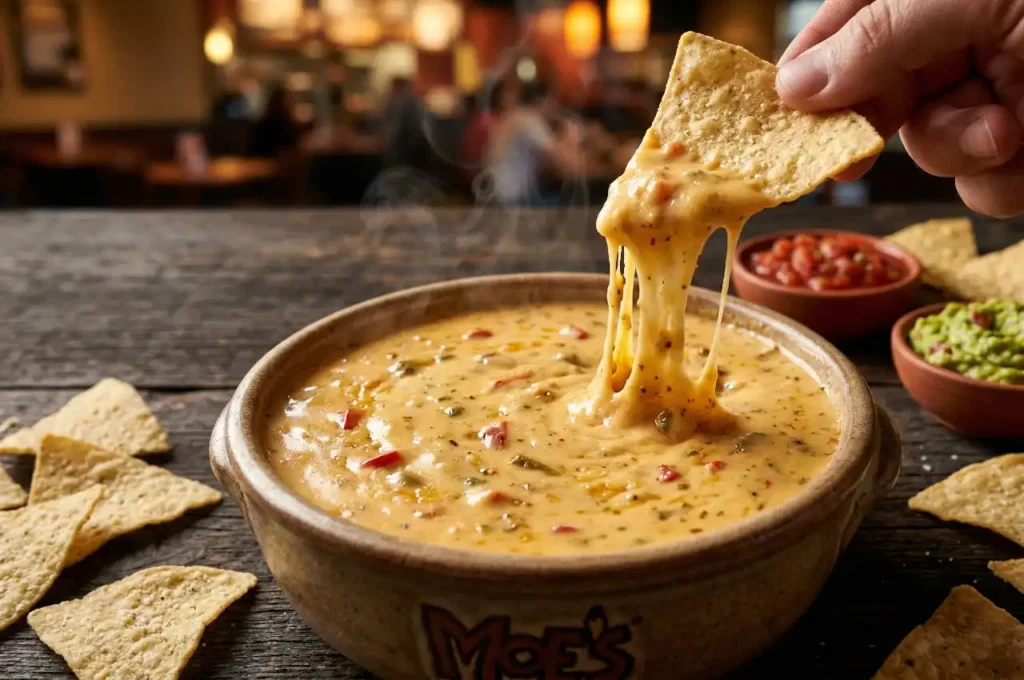
A commonly reported figure for a 1-cup serving (the size that many nutrition sites call a “cup” or large side) of Moe’s queso sits around 460 calories, with roughly 39 g total fat, 23 g saturated fat, ~15 g carbs, and 18 g protein. Sodium for that serving commonly shows up in the 1,700–1,800 mg range depending on the database. Those numbers are consistent across a few nutrition databases that pull chain menus and lab analyses.
Smaller “side” cups (about 6 oz) are often reported closer to 300–360 calories, which is why you’ll see different calorie numbers depending on where you look. Portion size explains most of the variation. If you’re watching calories, the single most useful trick is to measure or eyeball the portion and plan for that 300–460 calorie swing depending on cup size.
For the most accurate numbers, it’s always best to compare estimates with the official Moe’s nutrition guide, since recipes and serving sizes may change over time.
The Sodium Shock
Here’s the tough part: a single cup (the larger side) can deliver around three-quarters of the daily sodium limit recommended by health authorities. The U.S. Dietary Guidelines recommend adults limit sodium to less than 2,300 mg/day, while the American Heart Association says an ideal target for many people is 1,500 mg/day. That means a big cup of queso may eat up most — or all — of your sodium budget before you’ve even had beans or salsa. For people with high blood pressure or heart disease risk, that’s a real concern to keep in mind.
Queso vs. Guacamole
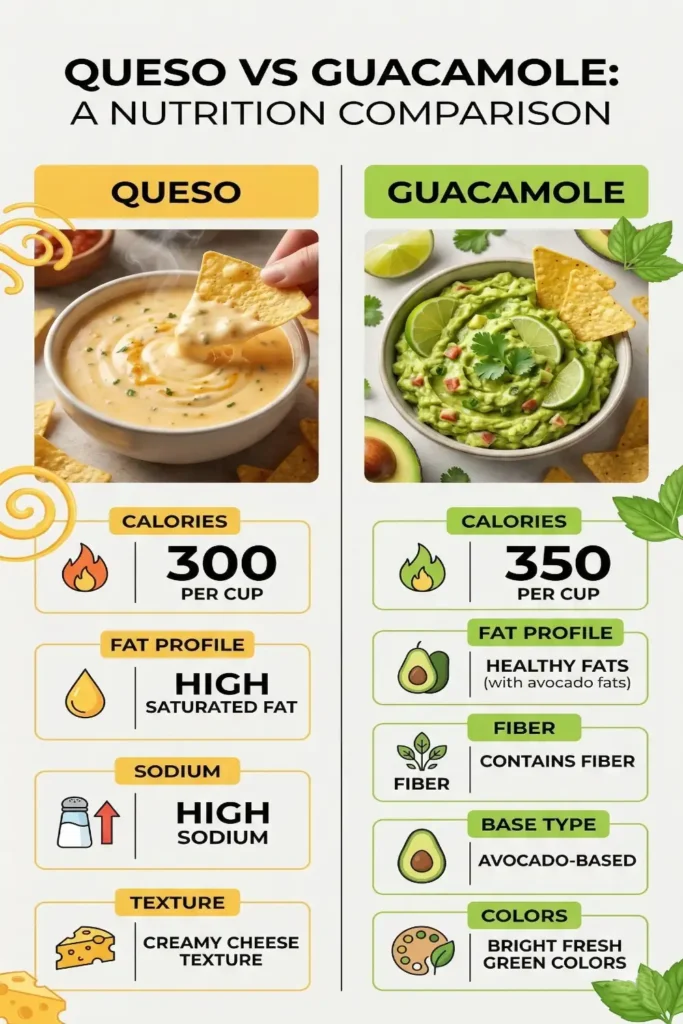
You asked for a head-to-head, so let’s be blunt and practical. Different sources report different calorie counts for both queso and guacamole because serving sizes vary and recipes differ. In the rough comparison you mentioned (queso ≈ 300 cal per cup; guac ≈ 350 cal per cup), the two are actually closer than people expect.
Nutritionally, guacamole brings heart-healthy monounsaturated fats, fiber, and more vitamins from avocado and lime. Queso brings saturated fat, more protein, and often a much bigger sodium hit. So if you’re weighing “satisfaction per calorie” and looking after blood pressure, guacamole often wins.
If you need protein and crave creaminess, queso fills that role but with higher saturated fat and sodium. My verdict: if you can only have one and sodium or heart-health is a concern, favor guacamole. If you’re after indulgence and sharing, queso is absolutely valid — just keep the portion small or order it on the side. (Remember, the exact calories depend on cup size and recipe).
The “Queso Hack” for Dieters
If you aren’t ready to skip queso, here are realistic hacks from people who love flavor but also care about macros:
- Order queso on the side. You control how much you dip. A few spoons will satisfy more than you expect.
- Share a cup. Split with a friend — suddenly half a serving looks very reasonable.
- Use veggies as dippers. Swap some chips for bell pepper strips or cucumber to get volume and fiber with fewer calories.
- Ask for a small portion or ask if they’ll “light” it. Not all locations will do this, but smaller servings are common.
- Pair with protein-forward items. If the rest of your plate has lean protein and veggies, a spoon of queso feels indulgent but won’t wreck your day.
The key: smaller portion + slower dipping = same joy, fewer calories.
Common Mistakes People Make With Moe’s Queso
Even people who track calories carefully tend to underestimate how quickly Moe’s Queso can change the nutrition profile of a meal. A few common mistakes show up again and again.
Understanding these mistakes doesn’t mean you have to avoid queso. It just helps you make decisions about portion size and balance before the meal gets away from you.
Adjustment & Feedback: Fitting Moe’s Queso into Your Routine
Most people don’t need to eliminate foods like Moe’s Queso to keep their nutrition on track. What usually works better is adjusting portions and paying attention to patterns over time.
If queso is something you enjoy regularly, try tracking how often it appears in your meals for a week or two. You might notice that it shows up more often than expected, especially if you also order chips or other high-sodium items.
From there, experiment with simple adjustments:
- order a smaller portion
- share a cup with someone
- use queso as a topping instead of a dip
- pair it with bowls that emphasize vegetables and lean protein
After 1–2 weeks, check how those changes affect your overall calorie and sodium intake. Small adjustments often make a bigger difference than cutting foods out completely. The goal is to keep meals satisfying while making sure one add-on doesn’t quietly dominate the nutrition numbers.
Is Queso Keto Friendly?
Short answer: it can be, depending on portion. Queso’s high fat and moderate protein make it compatible with low-carb and ketogenic frameworks on a macros level. But two important caveats: the carbs aren’t zero (some versions show ~15 g carbs per cup), and the sodium and saturated fat are high. For strict ketogenic dieters who track net carbs carefully, a tablespoon or two of queso may fit. For people aiming for heart-healthy keto or who have salt-sensitive blood pressure, queso is less ideal. If you’re on keto, measure your portion and count the carbs.
Also Read: Moe’s Chips Calories: The Side That Can Wreck Your Diet
Conclusion
Moe’s Queso is one of the most popular items on the Moe’s menu, but its calories and sodium can add up quickly if portions aren’t considered. It’s a classic fast-food indulgence: creamy, satisfying, and easy to overdo. The reality is simple — portion size decides whether it’s a small treat or a full nutrition event. Watch servings, consider swapping or sharing, and if sodium or saturated fat is a concern, favor guacamole or ask for smaller portions. Enjoy your dip, but know the numbers behind the pleasure so you can keep eating the food you love without surprises.