
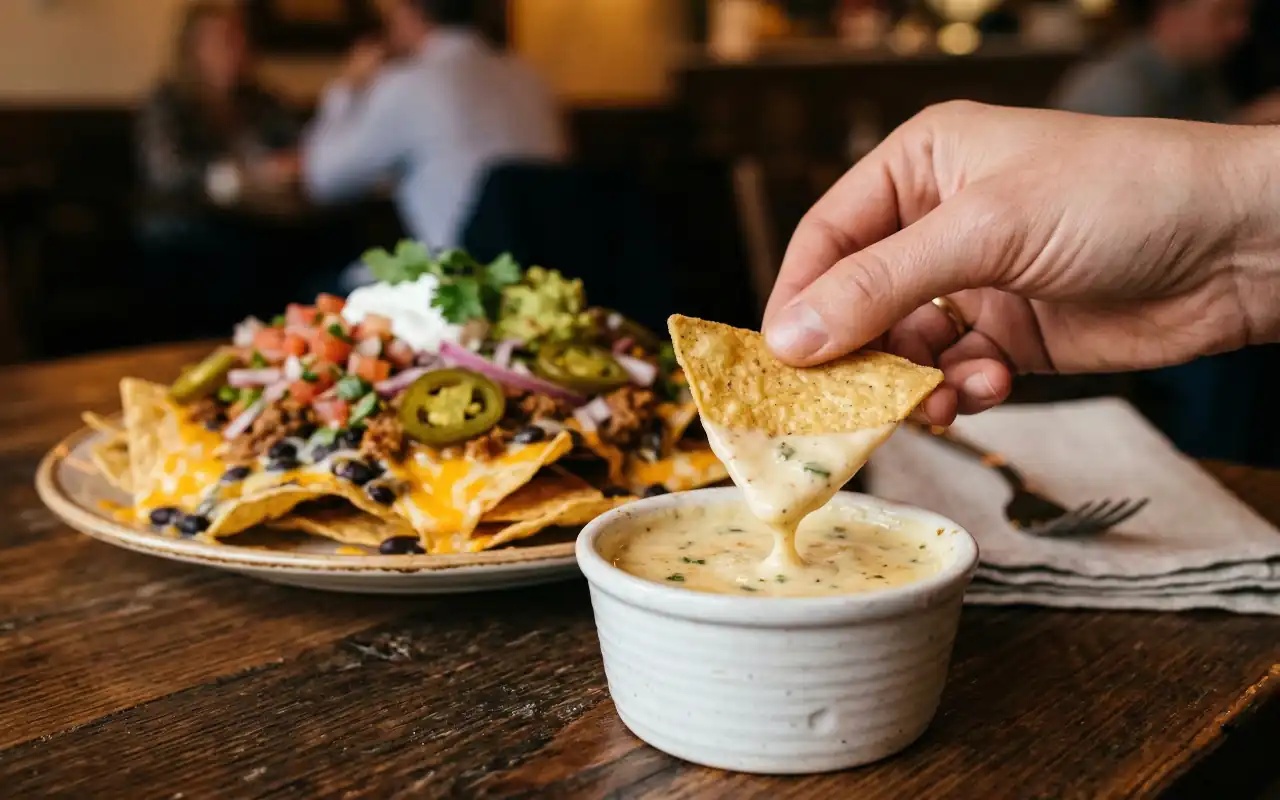
When people search for Moe’s Nachos Nutrition, they’re usually surprised by how quickly the calories add up once chips, queso, and toppings hit the tray. This friendly guide breaks down the real calorie hits, compares protein choices (adobo chicken, steak, beef, tofu), explains the queso trap, and gives smart swaps so you can enjoy nachos without wrecking your day.
If you love Moe’s but also care about what you eat, you probably asked yourself: how many calories are in those nachos? I get it. I’ve worked in fast food kitchens and studied menu nutrition enough to know where the traps are.
Nachos are a mashup of a few things that are individually fine but add up fast: chips, cheese (queso), seasoned meat, and extras. The chips are calorie-dense, queso brings fat and sodium, and “just a scoop” becomes two or three before you notice. If you’re comparing other menu items, you can review the full Moe’s menu nutrition breakdown to see how nachos compare with bowls, burritos, and other popular orders.
This guide walks through every part of a Moe’s nacho order like we’re standing at the service line together. I’ll compare protein choices — adobo chicken, sirloin steak, ground beef, and tofu — and show you where the real calories and sodium hide. I’ll also give realistic swaps you can ask for so your order feels indulgent but is actually kinder to your calories and your heart. No judgment. Just practical tips from someone who’s eaten their share of nachos and still enjoys them.
Also Read: Moe’s Nutrition PDF — Eating Smart at Moe’s Southwest Grill
What Are Moe’s Nachos?
Moe’s nachos are a customizable menu item made with fried tortilla chips, queso, protein, beans, and toppings. Depending on the portion of chips, queso, and meat, a typical order can range from roughly 700 to over 1,600 calories.
When you order nachos at Moe’s Southwest Grill you get a base of hot, fried corn chips piled with toppings you choose. Typical toppings include black or pinto beans, proteins (adobo chicken, steak, ground beef, or tofu), pico, guacamole, sour cream, and the famous queso.
Because Moe’s uses in-house-prepared chips and pours queso liberally, a single serving can swing widely in calories depending on portioning and how many “extras” you add. The official Moe’s build-your-own nachos nutrition listing shows how totals vary depending on toppings which demonstrates how customization changes total calories.
Moe’s Nachos Nutrition: Why the Chips Add Most of the Calories
The chips are the foundation, and restaurants rarely measure them like a packaged snack. One ounce of typical tortilla chips is around 130–140 calories, and most restaurant nacho bases are multiple ounces. Cooked and served free-form, chips at Moe’s can easily be 12–20 ounces worth of bulk for a full-share plate, which is why nachos often start in the 400–800 calorie territory before queso or meat. Standard nutrition databases show tortilla chips are very calorie-dense — about 470–490 calories per 100 grams according to the USDA FoodData Central database. That density is what makes them deceptively heavy.
Pro tip: ask for the chips on the side. It sounds small, but placing chips in a side cup or asking the staff to portion them reduces mindless scooping and sogginess. Dip, don’t drown. Controlling the base portion is the easiest, most effective way to lower total calories.
Portion sizes at fast-casual restaurants can vary by employee and location, so calorie estimates for nachos should always be treated as approximations rather than exact numbers.
Moe’s Nachos Nutrition: Comparing Chicken, Steak, Beef, and Tofu
Protein choice affects calories, fat, and satiety. Below are practical, real-world serving estimates you can expect at Moe’s for the protein portions that commonly go on nachos.
Adobo Chicken — The Lean Winner
Adobo chicken at Moe’s is typically the leanest option. A standard serving of the cooked chicken used in bowls or nachos is roughly 100–130 calories with about 18–25 grams of protein and low single-digit grams of fat. That makes it efficient for protein without a ton of extra calories. If you want muscle-building value with fewer calories, adobo chicken is your friend. Nutrition trackers list adobo chicken servings in that ballpark.
Sirloin Steak — Flavor-First, Slightly Higher Fat
Sirloin steak brings a bit more fat and similar protein. Expect roughly 120–140 calories per typical serving with around 15–20 grams of protein and more fat than chicken. It fills you up and tastes rich, but if your goal is to keep calories low, choose it carefully or pair it with fewer chips and less queso. Reliable menu databases put Moe’s steak servings around this range.
Ground Beef — The Calorie Creeper
Ground beef used on nachos tends to be higher in saturated fat and calories per serving. Typical values are in the 140–180 calorie range per protein portion with lower protein-per-calorie efficiency than chicken or steak. If you choose beef, consider asking for a smaller portion or pairing it with extra beans and veggies to spread the calories across fiber and protein.
Organic Tofu — The Vegan, Lower-Calorie Option
Moe’s tofu option is lower in calories — often near 100–110 calories per serving and around 8–12 grams of protein depending on preparation. Tofu soaks up salsas, which means you get flavor without the saturated fat. If you eat plant-based, tofu plus double beans and extra pico is a surprisingly satisfying route.
Verdict: for calorie control and protein, adobo chicken and tofu are the top picks. Steak is a tasty compromise. Ground beef is the heaviest option and easiest way to balloon calories and saturated fat.
Moe’s Nachos Macros: Carbs, Protein, and Fat
A typical order of Moe’s nachos contains a mix of carbohydrates, protein, and fat depending on the toppings. Chips contribute most of the carbohydrates, while queso and meats increase fat and protein levels.
For many builds, carbs from the chips make up the largest portion of the meal. Adding beans or lean protein like adobo chicken increases protein while helping balance the overall macros.
Typical Moe’s Nachos Nutrition (Estimated)
- Calories: 700–1,600
- Carbs: 70–120g
- Protein: 20–45g
- Fat: 30–80g
Moe’s Nachos Nutrition: How Queso Changes Calories and Sodium
Queso is the emotional heart of Moe’s nachos — and also the top calorie and sodium offender. Commercial and restaurant queso measures vary, but many nutrition databases put a scoop or ladle of restaurant queso in the 120–450 calorie range depending on portion size. Moe’s side portions and bowls listed in public trackers show that a cup or bowl of queso can reach several hundred calories and a heavy sodium load. The sauce is mostly fat and salt, so just a little goes a long way on flavor.
In many restaurant queso recipes, over 60% of calories come from fat, which is why even small portions significantly raise total calories.
If you want nachos with flavor but without the damage, request queso on the side and dip. That single change often halves the cheese calories you actually consume. Another tactic is to use salsa (tomatillo or el guapo) for moisture and flavor and reserve queso for a few bites.
Smart Ordering Strategies for Better Moe’s Nachos Nutrition
If you want a quick cheat sheet, here are the easiest swaps that can make your Moe’s nachos significantly lighter without sacrificing flavor.
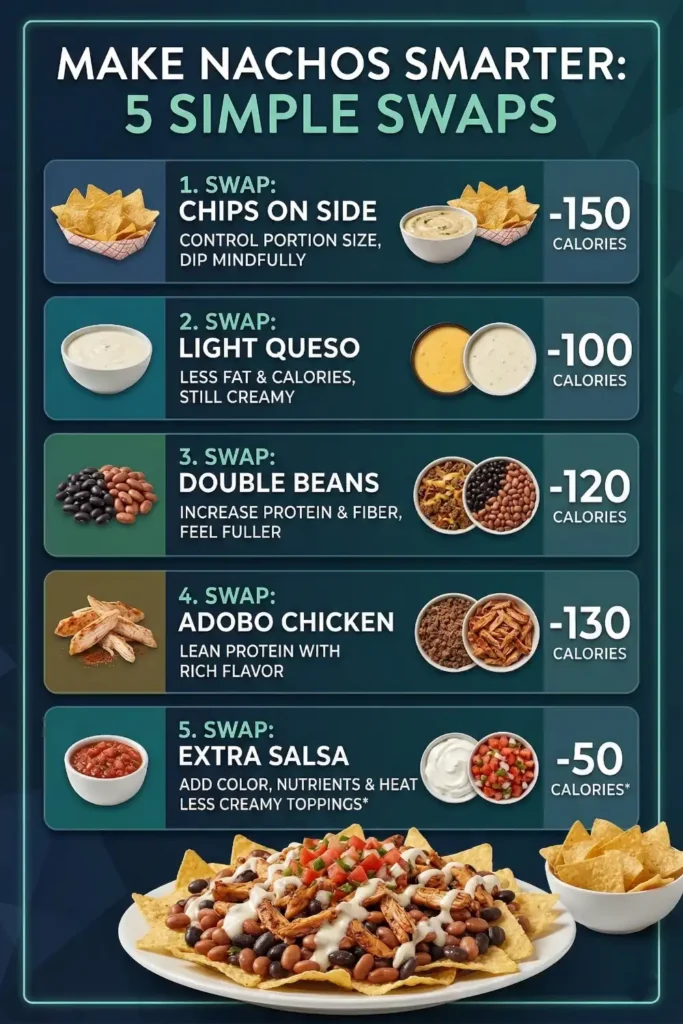
Here are realistic orders that fit different goals, with why they work and small modifications you can ask for.
The “High-protein” gym-rat nachos
Order nachos with double adobo chicken. Add black beans for extra protein and fiber and pico de gallo for freshness. Ask for chips on the side and get queso in a small cup or skip it. Why this works: doubling chicken raises protein substantially while keeping fat lower than beef, and beans add sustained energy. You’ll feel full longer and the protein will help muscle recovery.
The “Lower-Calorie” Craving Buster
Order nachos with single tofu or a single portion of adobo chicken. Load up with grilled peppers, onions, and pico. Ask for chips on the side and use tomatillo salsa instead of queso or sour cream. If you want creaminess, ask for a small scoop of guacamole — it’s calorically dense but offers healthy fats that satisfy cravings so you eat fewer chips. When you control chip portion and avoid heavy queso, a disciplined order can keep totals under 700 calories.
The “Fiber-Heavy” Veggie Stack
Order nachos with double beans (black and pinto) and no meat. Add lettuce, pico, roasted corn, and guacamole. Ask for chips on the side or a smaller chip portion, and get salsa on top. Beans are filling, high in fiber, and pair well with crunchy chips. This order is often surprisingly filling and can be the best choice if you want slow-burning energy and fewer saturated fats.
Common Mistakes People Make With Moe’s Nachos Nutrition
The biggest mistake people make with Moe’s nachos is assuming the calories mostly come from the meat or cheese. In reality, the chips usually make up the majority of the calories.
Another common mistake is letting queso get poured directly over the entire tray. When queso coats every chip, the portion of cheese you eat becomes much larger than intended.
People also underestimate how fast toppings add up. Sour cream, guacamole, and queso together can add several hundred calories before protein is even considered.
Finally, many people skip fiber completely. Beans, pico, and vegetables slow digestion and help you feel full. Without them, nachos are mostly refined carbs and fat, which can lead to overeating later.
Sodium and Moe’s Nachos Nutrition: What Most People Miss
Nachos are a sodium minefield. Chips are salted, queso and processed cheeses are high in sodium, salsas and pickled toppings add salt, and seasoned proteins often have added salt. Public health guidance recommends keeping sodium under 2,300 mg per day for most adults according to the CDC, yet a single fully loaded order of nachos with queso and meat can contain a very large fraction of that limit.
If you are watching blood pressure or following a low-sodium diet, skip queso, ask for unsalted or light-salt chips if available, and choose fresh salsas over canned or pickled toppings. The Centers for Disease Control and Prevention and the FDA both highlight sodium as a common excess in restaurant meals.
Quick Ordering Script for Better Moe’s Nachos Nutrition
When the line forms, say: “I’ll have nachos with adobo chicken, black beans, pico, and grilled peppers. Chips on the side, queso in a small cup, please. Light on the salt if possible.” Short, polite, and precise. Being specific helps the staff portion toppings rather than piling everything on.
How to Adjust Your Moe’s Nachos Nutrition Over Time
The best way to improve your Moe’s nachos order is to treat it as an experiment rather than trying to make it perfect the first time.
Start by controlling the biggest calorie drivers: chips and queso. Try ordering chips on the side and limiting queso to a small portion.
After eating this version for a week or two, notice how satisfied you feel and whether your overall calorie intake changes during the day.
If you still feel hungry after meals, add more beans or lean protein. If calories are still high, reduce chip portions further or skip queso entirely.
Small adjustments made over 1–2 weeks tend to be easier to maintain than dramatic changes all at once.
Also Read: Love Moe’s Queso? Read This Before Your Next Dip
Conclusion
You do not have to give up Moe’s nachos to eat healthfully. The biggest levers you can control are the chip portion, the queso portion, and the protein choice. Adobo chicken and tofu are the leanest picks. Steak gives satisfaction but adds some extra fat.
Ground beef is the most calorie- and fat-dense option. Ask for chips on the side, get queso sparingly or on the side, and load up on beans and fresh salsas. That combination keeps the nacho feeling intact while lowering calories and sodium by a meaningful amount.
If you frequently order from Moe’s, saving a few favorite nacho combinations can make it easier to track your nutrition and repeat orders that work for your goals.